In today’s fast-moving global economy, understanding How Does Logistics Work is essential for businesses and individuals involved in shipping, transportation, or supply chain operations. Logistics is much more than simply moving goods from one place to another; it involves careful planning, coordination, storage, and delivery to ensure products reach their destination safely, on time, and at the lowest possible cost. An efficient logistics system helps reduce operational expenses, improve customer satisfaction, and support business growth in highly competitive markets.
Whether you’re a business owner looking to optimize deliveries or simply curious about the journey products take before reaching your doorstep, understanding the fundamentals of logistics can provide valuable insights. From warehousing and freight forwarding to customs clearance and final delivery, every stage plays a vital role in maintaining a seamless flow of goods. At Global Cargoo Solution, we provide comprehensive logistics services designed to simplify these complex operations for businesses of all sizes. In this guide, we’ll break down each stage of the logistics process, explain how modern logistics systems operate, and show why effective logistics management is critical for long-term business success.
How Does Logistics Work in Modern Business?
Understanding How Does Logistics Work is the first step toward appreciating how products move efficiently from manufacturers to customers. In modern business, logistics is the strategic process of planning, implementing, and controlling the movement and storage of goods, services, and information throughout the supply chain. It ensures that the right products reach the right destination, at the right time, in the right condition, and at the most cost-effective price.
Modern logistics extends far beyond transportation. It involves coordinating multiple activities such as procurement, warehousing, inventory control, packaging, order processing, shipment tracking, customs clearance, and last-mile delivery. Every stage is interconnected, meaning even a small delay in one process can impact the entire operation. This is why businesses rely on well-organized logistics systems to maintain efficiency, reduce costs, and meet customer expectations.
A well-managed logistics operation offers several important benefits. It shortens delivery times, minimizes operational expenses, reduces product damage, improves inventory accuracy, and enhances customer satisfaction. For industries such as manufacturing, retail, e-commerce, healthcare, and construction, effective logistics is a key competitive advantage that supports long-term growth and profitability.
For example, when a customer places an online order, the logistics process begins immediately. The order is verified, the product is picked from the warehouse, securely packaged, dispatched through the most suitable transportation method, monitored throughout transit, and finally delivered to the customer’s location. Behind this seemingly simple experience lies a coordinated network of professionals, technology, warehouses, and transportation systems working together to ensure a smooth delivery.
At Global Cargoo Solution, we understand that every shipment is unique. Our comprehensive logistics solutions are designed to simplify complex shipping operations, improve operational efficiency, and provide reliable delivery services for businesses across local and international markets. By combining industry expertise with modern technology, we help clients streamline their logistics operations while ensuring their cargo reaches its destination safely and on schedule.
The Complete Supply Chain Journey
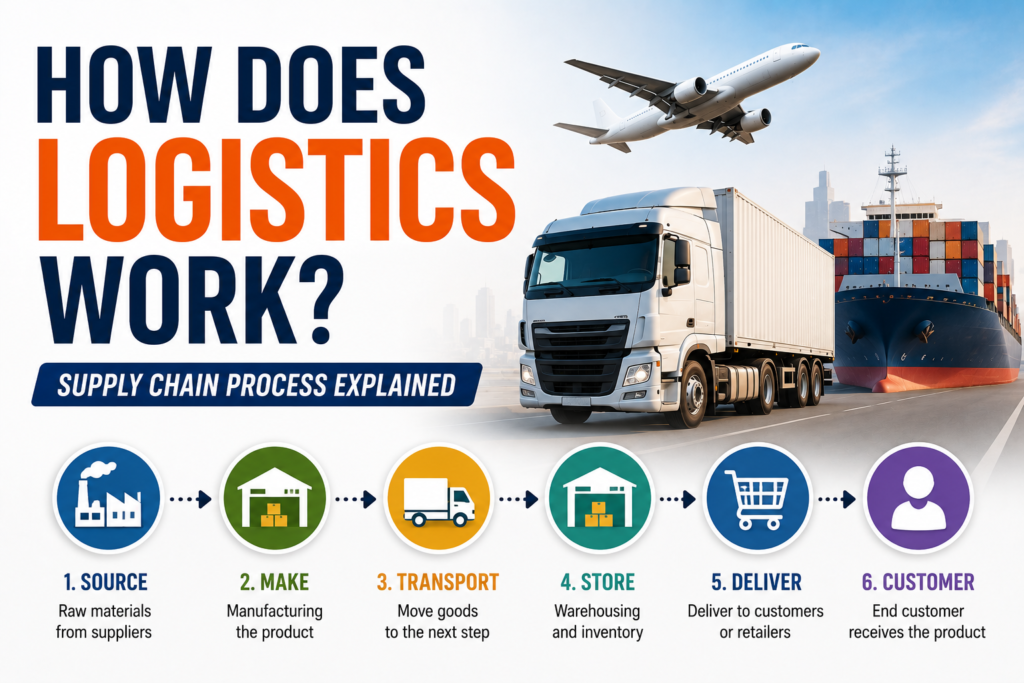
Before understanding how logistics works in detail, it’s important to know how products travel from manufacturers to customers. Every item passes through several connected stages, forming a complete Supply Chain Process that ensures goods are available at the right place and time. Each stage depends on the previous one, making coordination and efficiency essential for successful logistics operations.
1. Procurement of Raw Materials
The journey begins with sourcing raw materials from trusted suppliers. Businesses carefully select vendors based on quality, cost, and reliability. Proper procurement ensures manufacturers always have the resources needed to keep production running without delays.
2. Manufacturing and Production
Once the materials arrive, they are converted into finished products through the manufacturing process. During this stage, companies follow strict quality control measures to ensure every product meets customer expectations before moving to the next phase.
3. Warehousing and Storage
Finished products are transported to warehouses or distribution centers where they are stored safely until orders are received. Organized warehousing allows businesses to protect inventory, reduce handling errors, and prepare shipments quickly.
4. Order Processing and Packaging
When a customer places an order, warehouse staff locate the products, verify their condition, and package them securely. Proper packaging protects goods during transportation and minimizes the risk of damage while improving delivery efficiency.
5. Transportation and Distribution
After packaging, shipments are dispatched using the most suitable transport method based on delivery time, cargo type, destination, and budget. Efficient transportation ensures products move smoothly between warehouses, distribution centers, retailers, and customers.
6. Customs Clearance (For International Shipments)
For cross-border shipments, goods must pass through customs before entering another country. Accurate documentation, regulatory compliance, and timely clearance help prevent shipping delays and additional costs.
7. Final Delivery to the Customer
The final stage is last-mile delivery, where products reach the customer’s location. This is often the most important step because timely and damage-free deliveries directly impact customer satisfaction, trust, and future business.
Why Every Stage Matters
Each stage of the supply chain is interconnected. A delay in procurement, production, warehousing, or transportation can affect the entire delivery schedule. That’s why businesses rely on experienced logistics partners like Global Cargoo Solution to coordinate every step efficiently, ensuring products move seamlessly from origin to destination while maintaining speed, accuracy, and reliability.
How Does Logistics Work Step by Step
Understanding How Does Logistics Work becomes much easier when you break the logistics process into individual stages. Every shipment follows a structured workflow designed to move goods efficiently from the seller to the customer. While the exact process may vary depending on the industry or shipment type, the core logistics cycle remains largely the same.
How Does Logistics Work from Pickup to Delivery?
The journey begins when a customer places an order or a business schedules a shipment. From that point onward, logistics professionals coordinate every activity to ensure the cargo reaches its destination safely, efficiently, and on time.
1. Order Placement and Verification
The logistics process starts when an order is received. The order details, including product quantity, delivery address, and shipping requirements, are verified to ensure accuracy. This step helps prevent fulfillment errors and delivery delays.
2. Inventory Allocation
Once the order is confirmed, the required products are identified within the warehouse. The logistics team checks stock availability and reserves the items for dispatch. Accurate inventory records help avoid stock shortages and order cancellations.
3. Picking and Secure Packaging
Warehouse staff pick the products from storage shelves and prepare them for shipping. Each item is carefully packaged using appropriate materials to protect it from damage during handling and transportation. Proper labeling is also applied to ensure accurate shipment tracking.
4. Shipment Planning and Dispatch
Before the shipment leaves the warehouse, logistics coordinators select the most efficient transportation method based on factors such as destination, delivery timeline, cargo size, and shipping costs. The shipment is then loaded and dispatched according to the planned schedule.
5. Real-Time Shipment Tracking
Modern logistics companies use GPS tracking and digital monitoring systems to keep shipments visible throughout transit. Businesses can monitor cargo movement, receive delivery updates, and respond quickly if unexpected delays occur.
6. Customs Clearance (International Shipments)
For international deliveries, shipments must clear customs before entering the destination country. This involves submitting the required documentation, complying with import and export regulations, and completing inspections where necessary. Efficient customs handling keeps deliveries on schedule.
7. Last-Mile Delivery
The final stage is delivering the shipment from the local distribution center to the customer’s doorstep. Since this is the customer’s direct interaction with the logistics process, timely and damage-free delivery plays a major role in customer satisfaction and brand reputation.
8. Delivery Confirmation and Customer Support
After the shipment is delivered, proof of delivery is recorded, and the order is marked as complete. If customers have questions, need shipment updates, or require assistance with returns, the logistics provider offers post-delivery support to ensure a smooth customer experience.
By following these structured steps, businesses can reduce shipping errors, improve operational efficiency, and provide faster, more reliable deliveries. At Global Cargoo Solution, every shipment is managed through a streamlined logistics workflow, ensuring cargo is handled professionally from pickup to final delivery.
Key Components of an Efficient Logistics System
A successful logistics operation depends on several interconnected components working together seamlessly. Each element plays a critical role in ensuring goods move efficiently from the point of origin to the final destination. When these components are properly managed, businesses can reduce costs, improve delivery performance, and enhance customer satisfaction.
Warehousing
Warehousing is the foundation of an efficient logistics system. It provides a secure location for storing goods before they are distributed to customers or retailers. A well-organized warehouse improves order accuracy, speeds up fulfillment, and reduces the risk of product damage or inventory loss.
Order Management
Efficient order management ensures customer orders are received, processed, and fulfilled without delays. This includes verifying order details, coordinating with warehouse teams, generating shipping documents, and preparing products for dispatch. A streamlined order management system minimizes errors and improves the overall customer experience.
Transportation Planning
Selecting the right transportation method is essential for timely and cost-effective deliveries. Logistics professionals evaluate factors such as shipment size, destination, delivery deadlines, and shipping costs before choosing the most suitable mode of transport. Effective transportation planning helps reduce transit times and optimize operational efficiency.
Packaging and Cargo Handling
Proper packaging protects goods from damage during storage and transportation. Different products require different packaging materials and handling procedures based on their size, weight, and fragility. Safe cargo handling reduces product losses while ensuring shipments arrive in excellent condition.
Shipment Tracking
Modern logistics systems provide real-time shipment tracking through GPS and digital monitoring technologies. Businesses and customers can monitor shipment progress, receive delivery updates, and quickly respond to unexpected delays. Greater visibility improves transparency and builds customer confidence.
Customs and Regulatory Compliance
International shipments must comply with customs regulations and documentation requirements. Accurate paperwork, import and export compliance, and timely customs clearance help prevent delays, penalties, and unnecessary shipping costs. Experienced logistics providers simplify this process by managing all regulatory requirements efficiently.
Customer Support and Communication
Strong communication is a key component of professional logistics services. Customers expect timely updates, quick responses to inquiries, and immediate assistance when issues arise. Reliable customer support enhances trust, strengthens business relationships, and contributes to long-term customer loyalty.
An efficient logistics system is not built on a single process but on the smooth coordination of all these components. At Global Cargoo Solution, we integrate advanced logistics practices, experienced professionals, and modern technology to ensure every shipment is handled efficiently, securely, and delivered on time.
Transportation Methods Used in Logistics
Choosing the right transportation method is one of the most important decisions in logistics. The success of a shipment depends on factors such as delivery speed, shipping costs, cargo type, destination, and customer requirements. Transportation and Logistics work together to ensure products are delivered efficiently while maintaining safety, reliability, and cost-effectiveness.
Road Transportation
Road freight is one of the most commonly used transportation methods for local and regional deliveries. Trucks and delivery vehicles offer flexible routes, making them ideal for door-to-door shipping. Road transportation is widely used for retail distribution, e-commerce deliveries, and short-distance cargo movement because it provides faster access to customers and businesses.
Air Freight
Air freight is the fastest shipping option available for businesses that require urgent deliveries. It is commonly used for high-value, time-sensitive, or perishable goods such as electronics, medical supplies, and pharmaceuticals. Although air transportation is more expensive than other shipping methods, it significantly reduces transit time and improves delivery reliability for international shipments.
Sea Freight
Sea freight is the preferred choice for transporting large volumes of cargo across international markets. Shipping containers can carry heavy machinery, industrial equipment, raw materials, and bulk products at a much lower cost than air freight. While ocean shipping takes longer, it remains the most economical solution for businesses that regularly import or export goods worldwide.
Choosing the Right Transportation Method
There is no single transportation method that suits every shipment. Businesses must evaluate delivery deadlines, cargo size, product value, destination, and budget before selecting the most suitable option. Working with an experienced logistics partner ensures shipments are planned using the most efficient route and transport combination.
At Global Cargoo Solution, we provide customized transportation solutions tailored to each client’s shipping requirements. Whether your cargo needs to move by road, air, sea, rail, or through a multimodal network, our experienced team ensures every shipment is delivered safely, efficiently, and on schedule.
Why Inventory Control Matters in Logistics
Efficient inventory control is one of the most important factors in a successful logistics operation. No matter how fast transportation or delivery systems are, poor stock management can lead to delayed shipments, higher operational costs, and dissatisfied customers. Effective Inventory Management helps businesses maintain the right balance between product availability and storage costs, ensuring orders are fulfilled accurately and on time.
Prevents Stock Shortages
Running out of stock can result in missed sales opportunities and disappointed customers. Proper inventory control allows businesses to monitor stock levels in real time and replenish products before they become unavailable. This ensures smooth order fulfillment and reduces the risk of delivery delays.
Reduces Excess Inventory
Keeping more inventory than necessary increases warehousing costs, ties up capital, and raises the risk of product damage or obsolescence. Effective inventory planning helps businesses maintain optimal stock levels, reducing unnecessary storage expenses while improving cash flow.
Improves Order Accuracy
Well-organized inventory systems make it easier for warehouse teams to locate, pick, and pack products correctly. Accurate stock records minimize picking errors, reduce returns, and ensure customers receive the right products on the first attempt.
Enhances Warehouse Efficiency
An organized warehouse allows employees to work more efficiently by reducing the time spent searching for products. Clearly labeled storage locations, barcode systems, and automated inventory tracking improve productivity and speed up order processing.
Supports Better Demand Forecasting
Inventory data provides valuable insights into customer buying patterns and seasonal demand. By analyzing historical sales trends, businesses can forecast future inventory requirements, avoid stock imbalances, and make informed purchasing decisions.
Increases Customer Satisfaction
Customers expect products to be available and delivered on time. Effective inventory control helps businesses fulfill orders quickly and accurately, leading to higher customer satisfaction, positive reviews, and stronger long-term relationships.
At Global Cargoo Solution, we understand that inventory control is a critical part of efficient logistics. Our warehousing and inventory solutions are designed to help businesses maintain accurate stock levels, streamline warehouse operations, and ensure products are always ready for timely distribution.
Technologies That Make Logistics Faster
Technology has transformed the logistics industry by making operations more efficient, accurate, and transparent. Modern logistics companies rely on advanced digital solutions to automate processes, reduce manual errors, and improve decision-making. These innovations help businesses deliver products faster while lowering operational costs and enhancing the customer experience.
GPS and Real-Time Tracking
GPS tracking allows logistics providers to monitor shipments throughout their journey. Businesses and customers can view the real-time location of cargo, receive estimated delivery times, and quickly respond to unexpected delays. This increased visibility improves planning and builds customer confidence.
Warehouse Management Systems (WMS)
A Warehouse Management System helps organize warehouse operations by managing inventory, storage locations, order picking, and shipment preparation. WMS software improves inventory accuracy, speeds up order fulfillment, and reduces warehouse operating costs through better resource utilization.
Transportation Management Systems (TMS)
Transportation Management Systems streamline the planning and execution of shipments. They help logistics teams choose the most efficient delivery routes, compare transportation costs, schedule carriers, and monitor shipment performance. This results in faster deliveries and improved operational efficiency.
Artificial Intelligence (AI)
Artificial Intelligence is becoming an essential tool in logistics. AI analyzes large volumes of data to predict demand, optimize delivery routes, identify potential delays, and improve resource planning. By using predictive analytics, businesses can make smarter decisions and minimize disruptions across their logistics network.
Internet of Things (IoT)
IoT devices use sensors connected to the internet to collect real-time information about shipments. These sensors can monitor temperature, humidity, location, and cargo conditions during transportation. This technology is especially valuable for sensitive products such as pharmaceuticals, food, and electronics that require constant environmental monitoring.
Automation and Robotics
Automation has significantly improved warehouse productivity. Automated storage systems, conveyor belts, robotic picking solutions, and sorting machines reduce manual labor while increasing speed and accuracy. These technologies help warehouses process more orders within shorter timeframes.
Digital Documentation and Cloud Platforms
Traditional paperwork is rapidly being replaced by digital documentation and cloud-based logistics platforms. Electronic invoices, shipping documents, customs paperwork, and delivery confirmations can be accessed instantly, reducing administrative work and minimizing processing delays.
At Global Cargoo Solution, we leverage modern logistics technologies to deliver faster, safer, and more reliable shipping solutions. By combining experienced professionals with advanced digital tools, we help businesses optimize their logistics operations, improve shipment visibility, and ensure every delivery reaches its destination efficiently.
Common Logistics Challenges and Their Solutions
Even the most well-planned logistics operations can face unexpected challenges. From transportation delays to rising operational costs, these issues can disrupt supply chains and affect customer satisfaction. The key to successful logistics is identifying these challenges early and implementing effective solutions that keep goods moving efficiently.
Transportation Delays
Traffic congestion, severe weather, vehicle breakdowns, and port congestion can delay shipments and impact delivery schedules. Businesses can reduce these risks by using route optimization software, monitoring shipments in real time, and working with reliable logistics partners that have alternative transportation plans.
Rising Transportation Costs
Fuel price fluctuations, labor expenses, and increasing freight rates can significantly increase logistics costs. Optimizing delivery routes, consolidating shipments, and selecting the most cost-effective transportation methods help businesses control expenses without compromising service quality.
Customs and Regulatory Issues
International shipments often face delays due to incomplete documentation or changing import and export regulations. Preparing accurate paperwork, complying with customs requirements, and partnering with experienced freight forwarding companies can speed up customs clearance and reduce unnecessary delays.
Inventory Inaccuracies
Incorrect inventory records can lead to stock shortages, overstocking, delayed shipments, and order fulfillment errors. Businesses can overcome this challenge by implementing automated inventory tracking systems, conducting regular stock audits, and maintaining accurate warehouse records.
Poor Communication
A lack of communication between suppliers, warehouses, transport providers, and customers can create confusion and delay deliveries. Using centralized logistics management systems and providing real-time shipment updates helps improve coordination and ensures everyone has access to the latest information.
Last-Mile Delivery Challenges
The final stage of delivery is often the most complex due to traffic conditions, incorrect addresses, or failed delivery attempts. Efficient route planning, GPS tracking, and flexible delivery options help improve last-mile performance while enhancing the customer experience.
Managing Business Growth
As businesses expand, logistics operations become more complex. Higher order volumes, additional warehouse requirements, and larger distribution networks require scalable logistics solutions. Companies that invest in technology and experienced logistics partners are better prepared to handle increasing demand without sacrificing service quality.
At Global Cargoo Solution, we understand the challenges businesses face in today’s fast-paced logistics industry. Our experienced team combines advanced technology, strategic planning, and reliable transportation solutions to overcome these obstacles, ensuring every shipment is delivered safely, efficiently, and on time.
How Global Cargoo Solution Simplifies Logistics
Managing logistics requires expertise, reliable infrastructure, and seamless coordination across every stage of the shipping process. At Global Cargoo Solution, we provide comprehensive logistics solutions that simplify cargo movement for businesses of all sizes. From the initial pickup to the final delivery, our experienced team ensures every shipment is handled with precision, professionalism, and care.
End-to-End Logistics Solutions
We offer complete logistics services under one roof, eliminating the need to work with multiple service providers. Whether you need freight forwarding, warehousing, customs clearance, or last-mile delivery, our integrated solutions ensure a smooth and efficient shipping experience.
Customized Shipping Solutions
Every business has unique logistics requirements. We assess your cargo type, destination, delivery timeline, and budget to create a tailored shipping strategy that maximizes efficiency while minimizing costs. Our customized approach helps businesses achieve reliable and cost-effective logistics operations.
Reliable Domestic and International Shipping
Whether you’re shipping locally or internationally, our logistics network is designed to deliver your cargo safely and on schedule. We coordinate every aspect of the shipment, ensuring compliance with shipping regulations and maintaining complete visibility throughout the transportation process.
Secure Warehousing and Cargo Handling
Our warehousing facilities are equipped to store goods safely before distribution. Combined with professional cargo handling practices, we help reduce the risk of damage, improve inventory organization, and ensure products are always ready for dispatch when needed.
Advanced Shipment Tracking
Transparency is essential in modern logistics. Our tracking systems allow customers to monitor their shipments throughout the delivery journey, providing real-time updates and greater peace of mind. This visibility enables businesses to plan more effectively and keep their customers informed.
Experienced Logistics Professionals
Our team brings extensive industry knowledge and practical experience to every shipment. We carefully manage logistics planning, transportation coordination, documentation, and customer support to ensure every delivery meets the highest standards of reliability and efficiency.
Why Choose Global Cargoo Solution?
Businesses choose Global Cargoo Solution because we focus on delivering dependable, customer-centric logistics services. Our commitment to timely deliveries, transparent communication, competitive pricing, and tailored logistics strategies helps clients streamline their supply chains and achieve their business goals with confidence. Whether you’re transporting commercial goods, managing international shipments, or looking for a trusted long-term logistics partner, Global Cargoo Solution is dedicated to providing reliable, efficient, and scalable logistics services that keep your business moving forward.
Conclusion
Understanding How Does Logistics Work is essential for businesses that want to improve efficiency, reduce operational costs, and deliver exceptional customer experiences. From sourcing raw materials and warehousing to transportation, shipment tracking, and final delivery, every stage of the logistics process plays a vital role in ensuring goods reach their destination safely and on time. When these processes are managed effectively, businesses can streamline operations, minimize delays, and build stronger relationships with their customers.
Whether you’re managing local deliveries or international shipments, partnering with an experienced logistics provider can make all the difference. At Global Cargoo Solution, we offer reliable, end-to-end logistics services tailored to your unique business requirements. Our team combines industry expertise, advanced technology, and customer-focused solutions to simplify complex logistics operations and keep your supply chain moving efficiently. Contact Global Cargoo Solution today to discover how our professional logistics services can support your business growth with safe, timely, and cost-effective shipping solutions.
Frequently Asked Questions (FAQs)
1. What is logistics?
Logistics is the process of planning, managing, and controlling the movement, storage, and delivery of goods from the point of origin to the final customer. It involves activities such as warehousing, transportation, inventory control, order fulfillment, and shipment tracking.
2. What is the difference between logistics and the supply chain?
Logistics focuses on the transportation, storage, and distribution of goods, while the supply chain is a broader system that includes sourcing raw materials, manufacturing, procurement, logistics, and delivering products to customers. In simple terms, logistics is one important part of the overall supply chain.
3. Why is logistics important for businesses?
Efficient logistics helps businesses reduce transportation costs, improve delivery times, maintain product quality, optimize inventory, and increase customer satisfaction. A well-managed logistics system also improves operational efficiency and supports long-term business growth.
4. What are the main functions of logistics?
The main functions of logistics include procurement, warehousing, inventory control, packaging, transportation, order processing, customs clearance, shipment tracking, and final delivery. Together, these activities ensure products move efficiently through the supply chain.
5. Which transportation method is best for shipping goods?
The best transportation method depends on your shipment requirements. Road transport is ideal for local deliveries, air freight is best for urgent shipments, sea freight is the most economical option for large international cargo, and rail transport is suitable for moving heavy goods over long distances.
6. What challenges do logistics companies commonly face?
Common logistics challenges include transportation delays, rising fuel costs, customs clearance issues, inventory inaccuracies, warehouse inefficiencies, and last-mile delivery problems. These challenges can be minimized through proper planning, advanced technology, and experienced logistics management.
7. How does technology improve logistics operations?
Modern technologies such as GPS tracking, Warehouse Management Systems (WMS), Transportation Management Systems (TMS), Artificial Intelligence (AI), and IoT devices help improve shipment visibility, optimize delivery routes, automate warehouse operations, and enhance overall logistics efficiency.
8. Why should I choose Global Cargoo Solution?
Global Cargoo Solution provides reliable end-to-end logistics services, including freight forwarding, warehousing, customs clearance, cargo handling, and domestic and international shipping. Our experienced team focuses on delivering safe, timely, and cost-effective logistics solutions tailored to your business needs.