Efficient movement of goods depends on a well-planned Logistics Process that connects every stage of a shipment, from the initial order to final delivery. Whether a business ships products locally or internationally, every activity, including planning, documentation, cargo handling, storage, transportation, customs clearance, and distribution, must work together to ensure goods arrive safely and on time. A structured logistics workflow helps organizations reduce delays, control operational costs, improve inventory accuracy, and maintain customer satisfaction. Modern businesses also rely on advanced technologies such as GPS tracking, barcode scanning, ERP systems, and real-time shipment visibility to improve efficiency and decision-making. In this guide, you’ll learn how each step of the Process contributes to reliable cargo movement, stronger business performance, and a more resilient logistics operation across Saudi Arabia and international markets.
What Is the Logistics Process?
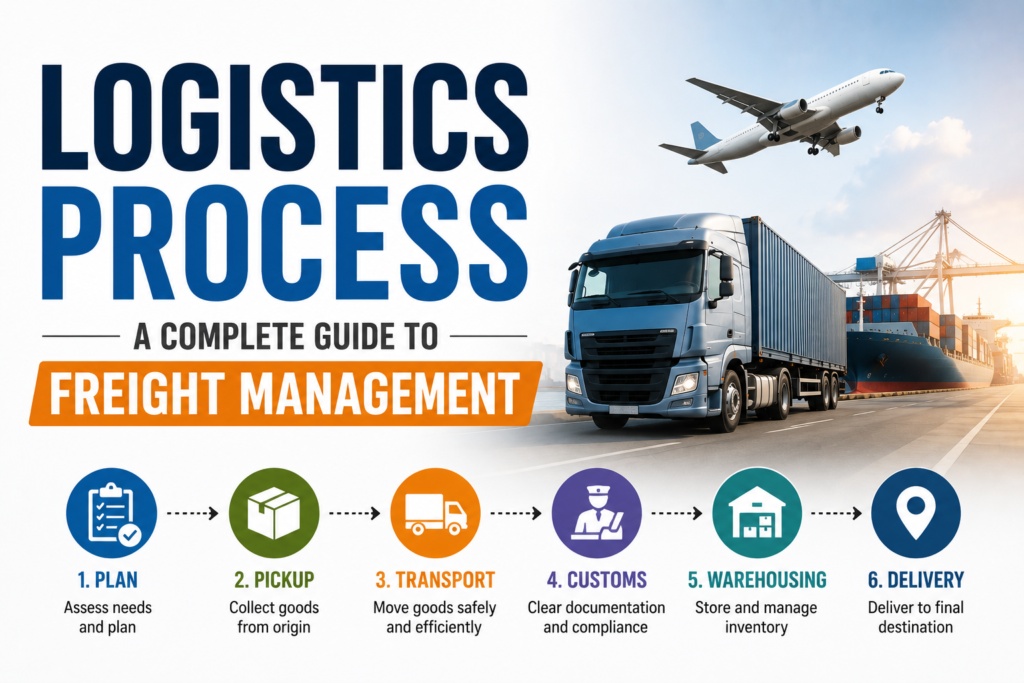
The Logistics Process is a structured workflow that manages the planning, movement, storage, and delivery of goods from their point of origin to the final customer. It begins with shipment planning and order processing, followed by cargo collection, documentation, inventory handling, transportation, customs procedures, and final distribution. Every stage is connected, meaning delays or errors in one step can affect the entire operation. An efficient logistics process ensures products reach the right destination safely, on time, and at the lowest possible cost. It also helps businesses improve operational efficiency, reduce unnecessary expenses, maintain accurate inventory records, and meet customer expectations. Unlike the broader Supply Chain, which includes procurement and production, the Process focuses specifically on executing the physical flow of goods while ensuring visibility, coordination, and consistent delivery performance throughout the journey.
Define Cargo and Delivery Needs
Every shipment has unique requirements that influence planning decisions. Businesses must identify whether the cargo is fragile, oversized, temperature-sensitive, hazardous, or high-value before selecting handling methods and equipment. Delivery expectations, including timelines, destination accessibility, unloading requirements, and special customer instructions, should also be confirmed in advance. Clearly defining these factors helps logistics teams choose appropriate packaging materials, loading procedures, vehicle capacity, and handling precautions. Proper cargo assessment reduces the likelihood of product damage, delivery delays, and unexpected costs while improving overall shipment reliability. By understanding cargo characteristics from the beginning, organizations can make informed operational decisions that support a smoother Process and ensure goods reach their destination safely and efficiently.
Why Every Logistics Stage Matters
Every stage of the Logistics Process plays a critical role in ensuring goods move efficiently from suppliers to customers without unnecessary delays or added costs. Accurate planning lays the foundation for smooth operations, while proper documentation prevents customs issues and compliance problems. Careful cargo handling reduces the risk of damage, organized inventory control keeps products available when needed, and efficient transportation ensures timely deliveries. Even a small mistake, such as incorrect shipment details, poor packaging, or delayed dispatch, can disrupt the entire workflow and increase operational expenses. When each stage is properly coordinated, businesses benefit from faster deliveries, improved order accuracy, better resource utilization, and higher customer satisfaction. A well-managed Process creates a connected workflow where every activity supports the next, resulting in reliable operations, stronger business performance, and long-term growth.
Step 1: Plan the Shipment
The first stage of the Logistics Process is careful shipment planning, which determines how goods will move from the sender to the final destination. Businesses begin by identifying the shipment origin, delivery location, cargo type, weight, dimensions, handling requirements, and expected delivery schedule. They also evaluate transportation costs, delivery priorities, and any import or export regulations that may affect the shipment. During this stage, companies assess potential risks, choose the most suitable routes, and prepare resources needed for smooth execution. Strong planning minimizes delays, avoids unnecessary expenses, and ensures every department works toward the same delivery objectives. A well-organized shipping plan also provides greater flexibility when unexpected challenges arise, allowing businesses to maintain reliable service while keeping the Process efficient, predictable, and focused on meeting customer expectations.
Step 2: Manage Orders and Documents
Once the shipment has been planned, the next stage of the Logistics Process is managing orders and preparing accurate shipping documentation. Every order must be verified to ensure product details, quantities, customer information, and delivery instructions are correct before cargo moves forward. Essential documents such as the Commercial Invoice, Packing List, Bill of Lading, Certificate of Origin, import permits, export declarations, and customs paperwork must be completed accurately to avoid delays or compliance issues. Proper documentation allows customs authorities, carriers, and warehouse teams to process shipments efficiently while reducing the risk of penalties or rejected cargo. Maintaining organized records also improves shipment visibility, simplifies communication between stakeholders, and supports smooth cargo movement across domestic and international routes. A well-documented Process minimizes disruptions and ensures every shipment progresses confidently to the next operational stage.
Step 3: Select the Freight Method
Choosing the right shipping method is one of the most important decisions in the Logistics Process because it directly affects delivery speed, transportation costs, cargo safety, and customer satisfaction. Businesses evaluate shipment size, weight, destination, urgency, and handling requirements before selecting the most suitable option. Common choices include road freight, air freight, sea freight, and multimodal transportation for complex delivery routes. Effective Freight Management ensures the selected carrier, shipping schedule, and transport mode align with business objectives while maintaining reliability and cost efficiency. Companies also compare transit times, route availability, cargo capacity, and potential risks before confirming bookings. Selecting the appropriate freight solution keeps operations running smoothly, minimizes unnecessary expenses, and strengthens the overall Process by ensuring goods move safely and efficiently toward their destination.
Step 4: Collect and Prepare Cargo
After transportation has been arranged, the next stage of the Logistics Process is collecting and preparing the cargo for shipment. Goods are picked up from the supplier or manufacturing facility and carefully inspected to verify quantities, product condition, weight, and dimensions. Each shipment is then packaged using suitable protective materials, labeled with accurate shipping information, and secured on pallets or containers when necessary. Barcode scanning and shipment identification labels help maintain visibility throughout the journey while reducing handling errors. Proper preparation also includes verifying loading instructions, handling requirements, and safety measures to protect goods during transit. Taking the time to prepare cargo correctly minimizes the risk of damage, improves loading efficiency, reduces operational delays, and ensures the Process continues smoothly as the shipment moves to the warehousing and storage stage.
Step 5: Receive Goods at the Warehouse
When the shipment arrives at the storage facility, the next phase of the Logistics Process begins with receiving and inspecting the goods. Warehouse teams unload the cargo, verify shipment quantities against the accompanying documents, and inspect each item for visible damage or discrepancies. Products are then scanned, registered in the inventory system, and assigned to designated storage locations based on their size, handling requirements, and turnover rate. Effective Warehouse Management ensures goods are stored accurately, inventory records remain up to date, and products are easy to locate when customer orders are received. Proper receiving procedures also help prevent stock inaccuracies, misplaced inventory, and unnecessary delays during order fulfilment. By maintaining accuracy at this stage, businesses strengthen the overall Process, improve operational efficiency, and create a reliable foundation for the remaining distribution activities.
Step 6: Store and Control Inventory
After receiving the shipment, the next stage of the Logistics Process focuses on storing products safely and maintaining accurate inventory control. Goods are organized according to product type, demand, storage conditions, and handling requirements to ensure quick access when orders are placed. Businesses continuously monitor stock levels, apply inventory rotation methods, maintain safety stock, and conduct routine stock verification to reduce errors and prevent shortages or overstocking. Proper inventory control also supports faster order fulfilment, better space utilization, and improved operational planning. Real-time inventory visibility enables logistics teams to respond quickly to changing customer demand while avoiding unnecessary storage costs. By keeping inventory organized and accurately managed, companies improve operational efficiency, reduce waste, and ensure the Process continues smoothly without disruptions that could affect delivery performance or customer satisfaction.
Step 7: Pick, Pack, and Dispatch
Once customer orders are confirmed, the Logistics Process moves into the picking, packing, and dispatch stage. Warehouse staff locate the required products, verify quantities, and perform quality checks to ensure the correct items are selected. The goods are then packed using appropriate protective materials to prevent damage during transit and labeled with accurate shipping information for easy identification. Before dispatch, each shipment is inspected to confirm that documentation, packaging, and loading instructions are complete. Cargo is carefully loaded onto the assigned vehicle in the correct sequence to support efficient unloading at the destination. A well-organized dispatch operation minimizes shipping errors, reduces delays, improves order accuracy, and keeps deliveries on schedule. By executing this stage efficiently, businesses strengthen the Process and provide customers with a reliable and consistent delivery experience.
Step 8: Clear Customs
For international shipments, customs clearance is a critical stage of the Logistics Process that ensures goods comply with the import and export regulations of the destination country. Before cargo can continue its journey, customs authorities review shipping documents, verify product classifications, assess applicable duties and taxes, and inspect shipments when required. Accurate documentation and regulatory compliance help prevent delays, penalties, and unnecessary storage charges at ports or border checkpoints. Businesses must also ensure that restricted or regulated goods meet all legal requirements before shipment. Working with experienced customs professionals streamlines communication with authorities and speeds up cargo release. Efficient customs handling keeps international shipments moving on schedule, reduces operational risks, and supports a seamless Process, allowing goods to reach their destination with minimal disruption and maximum reliability.
Step 9: Transport the Shipment
After customs clearance, the Logistics Process enters the transportation stage, where goods are moved safely from one location to another using the most suitable carrier and route. Depending on the shipment requirements, businesses may use trucks, cargo aircraft, cargo vessels, or a combination of transport modes to ensure timely delivery. Effective Transportation and Logistics planning focuses on route optimization, vehicle utilization, transit schedules, cargo security, and driver coordination to reduce delays and operating costs. Throughout the journey, logistics teams monitor shipment progress, respond to unexpected disruptions, and communicate important updates to stakeholders. Careful transportation planning helps maintain delivery schedules, protects cargo from damage, and improves overall operational efficiency. By managing this stage effectively, businesses strengthen the Process and ensure products continue moving smoothly toward their final destination.
Step 10: Track Cargo in Real Time
Real-time shipment visibility is an essential part of the Logistics Process because it allows businesses to monitor cargo from departure to final delivery. Modern tracking systems use GPS tracking, RFID, digital shipment updates, and integrated logistics software to provide accurate location information and estimated arrival times. These tools help logistics teams identify potential delays, adjust delivery schedules, and communicate proactively with customers and business partners. Continuous monitoring also improves cargo security by reducing the risk of theft, loss, or unauthorized handling during transit. In addition, real-time data enables better decision-making by providing insights into route performance, transit times, and operational efficiency. By maintaining complete shipment visibility, organizations improve customer confidence, resolve issues more quickly, and ensure the Process remains efficient, transparent, and dependable throughout every stage of transportation.
Step 11: Complete Final Delivery
The final delivery stage completes the Logistics Process by ensuring shipments reach the correct customer safely, accurately, and on schedule. Before arrival, delivery teams confirm addresses, coordinate delivery times, and communicate any important updates to the recipient. Upon reaching the destination, cargo is unloaded carefully, inspected for visible damage, and verified against the delivery documentation. Customers are asked to confirm receipt through a signature or digital proof of delivery, providing a record that the shipment has been completed successfully. Any delivery issues, such as damaged goods or incorrect quantities, are documented immediately for prompt resolution. A smooth final delivery enhances customer satisfaction, strengthens business credibility, and encourages repeat business. Successfully completing this stage demonstrates the effectiveness of the entire Process and reflects the quality of the logistics operation.
Step 12: Handle Returns and Reverse Flow
An efficient Logistics Process does not end when a shipment is delivered. Businesses must also manage product returns and reverse logistics to maintain customer satisfaction and recover valuable inventory. Returned goods may include damaged products, incorrect shipments, warranty claims, recyclable materials, or reusable packaging. Every return should be inspected, recorded, and processed quickly to determine whether the item can be repaired, restocked, replaced, or recycled. A structured reverse logistics system helps reduce waste, recover product value, and improve inventory accuracy while minimizing additional transportation and storage costs. Clear return procedures also strengthen customer trust by making exchanges and refunds easier to manage. By handling reverse flow efficiently, organizations improve operational performance, reduce financial losses, and ensure the Process remains complete, customer-focused, and sustainable from beginning to end.
Technology Behind Modern Logistics
Technology has transformed the Logistics Process by improving visibility, accuracy, and operational efficiency across every stage of cargo movement. Modern logistics companies use Transportation Management Systems (TMS), Warehouse Management Systems (WMS), Enterprise Resource Planning (ERP) software, barcode scanners, RFID, GPS tracking, and predictive analytics to streamline daily operations. These digital solutions automate shipment planning, optimize delivery routes, monitor inventory, and provide real-time updates that help businesses make faster, data-driven decisions. Automation also reduces manual errors, improves order accuracy, and enhances communication between suppliers, carriers, warehouses, and customers. By integrating advanced technologies into everyday operations, businesses gain complete shipment visibility, improve resource utilization, lower operating costs, and respond quickly to changing customer demands. Investing in modern technology makes the Process more reliable, scalable, and competitive in today’s fast-moving logistics industry.
Common Logistics Process Challenges
Even the most organized Logistics Process can face challenges that affect operational efficiency and delivery performance. Common issues include transportation delays, inaccurate shipping documents, inventory discrepancies, limited warehouse capacity, damaged cargo, customs inspections, rising fuel costs, and unexpected demand fluctuations. These problems can increase operational expenses, delay deliveries, and reduce customer satisfaction if they are not addressed quickly. Businesses can minimize these risks by improving demand forecasting, maintaining accurate inventory records, standardizing operating procedures, training logistics staff, and strengthening communication with suppliers and carriers. Regular performance monitoring also helps identify bottlenecks before they become costly disruptions. By proactively managing these challenges and implementing continuous improvement strategies, organizations can strengthen the Process, maintain reliable product movement, and build a more resilient logistics operation capable of adapting to changing market conditions.
How to Improve Logistics Efficiency
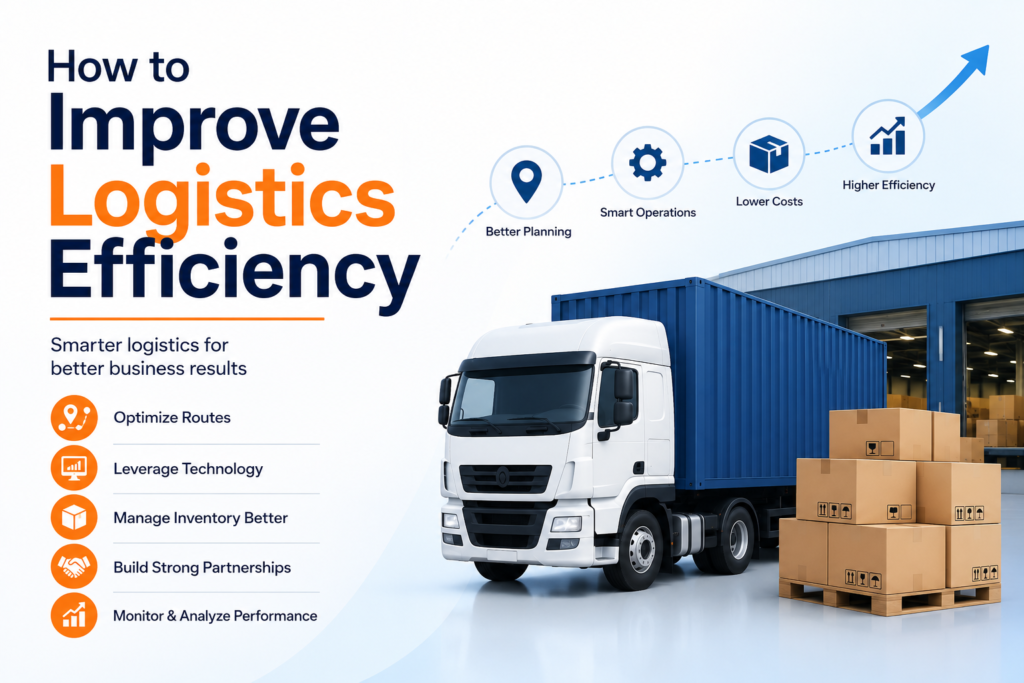
Improving the Logistics Process requires continuous evaluation and optimization of every operational stage. Businesses should establish standardized workflows, strengthen supplier communication, optimize delivery routes, and regularly review logistics performance to identify areas for improvement. Automating repetitive tasks, improving inventory accuracy, consolidating shipments, and reducing unnecessary handling can significantly lower operating costs while increasing productivity. Organizations should also monitor key performance indicators such as delivery accuracy, transit times, order fulfilment rates, and inventory turnover to measure efficiency and support data-driven decisions. Regular employee training and contingency planning help teams respond effectively to unexpected disruptions without affecting customer service. By embracing a culture of continuous improvement and investing in efficient operational practices, companies can enhance the Process, reduce delays, improve resource utilization, and achieve consistent, long-term operational excellence.
Logistics Operations in Saudi Arabia
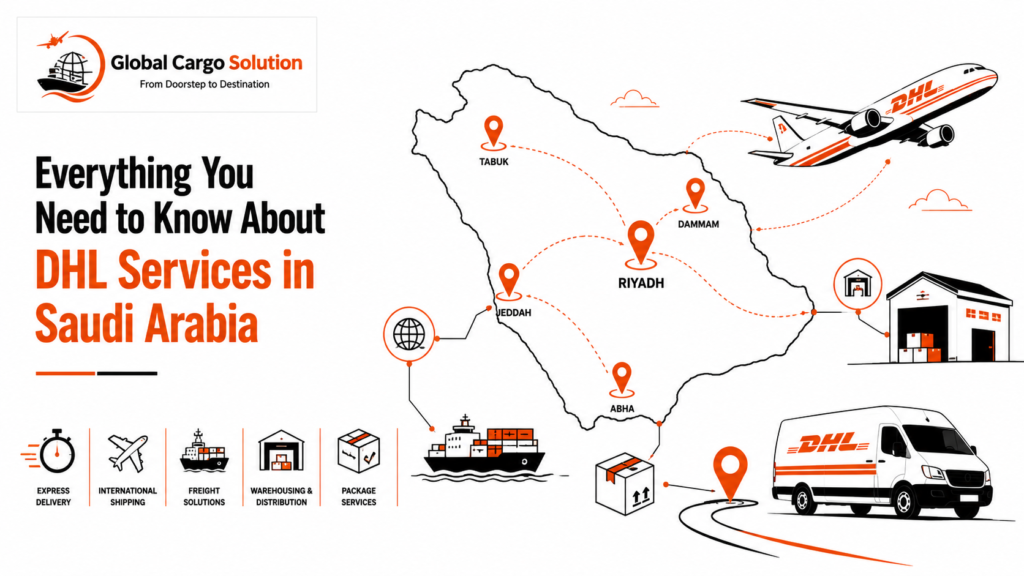
The Logistics Process plays a vital role in supporting business growth across Saudi Arabia, where expanding trade, industrial development, and e-commerce continue to increase the demand for efficient cargo movement. Major logistics hubs such as Riyadh, Jeddah, Dammam, Al Khobar, Jubail, Makkah, Madinah, Yanbu, and Jazan rely on integrated road, air, and sea networks to move goods quickly across the Kingdom and throughout the GCC region. Industries including manufacturing, retail, healthcare, construction, and oil and gas require dependable logistics operations to maintain uninterrupted supply and timely deliveries. Businesses that optimize every stage of the Process can reduce operating costs, improve delivery reliability, and respond more effectively to customer demand. Strong local expertise and regulatory knowledge also help ensure smooth domestic and cross-border cargo operations.
How Global Cargo Solution Can Help
At Global Cargo Solution, we simplify every stage of the Logistics Process by delivering reliable, customized logistics solutions for businesses across Saudi Arabia and the GCC. Our experienced team manages shipments with precision, ensuring cargo moves safely, efficiently, and on schedule from pickup to final delivery. We provide freight forwarding, road freight, air freight, sea freight, warehousing, customs clearance, transportation services, movers and packers, relocation services, and secure door-to-door delivery tailored to your operational requirements. Using modern tracking systems and proven logistics practices, we maintain shipment visibility, improve coordination, and minimize delivery delays. Whether you require domestic distribution or international cargo transportation, our customer-focused approach helps streamline operations, reduce logistics challenges, and support long-term business growth through a dependable and efficient Process.
Conclusion
An efficient Logistics Process is the foundation of successful cargo movement, ensuring goods travel smoothly from shipment planning to final delivery. Every stage, including documentation, freight selection, cargo preparation, inventory control, warehousing, customs clearance, transportation, tracking, and reverse logistics, contributes to operational efficiency and customer satisfaction. When these activities are properly coordinated, businesses can reduce costs, improve delivery accuracy, minimize delays, and strengthen overall supply chain performance. Modern technology, skilled logistics professionals, and continuous process improvement further enhance reliability and help organizations adapt to changing market demands. Whether serving local customers or managing international shipments, investing in a well-structured Process enables businesses to operate more efficiently and remain competitive. Partnering with Global Cargo Solution ensures you have an experienced logistics provider dedicated to delivering safe, timely, and dependable cargo solutions across Saudi Arabia and beyond.
Frequently Asked Questions
1. What is the Logistics Process?
The Logistics Process is the step-by-step workflow used to plan, move, store, track, and deliver goods from the point of origin to the final customer. It includes shipment planning, documentation, cargo handling, warehousing, transportation, customs clearance, delivery, and reverse logistics to ensure products move efficiently and safely.
2. Why is the logistics process important for businesses?
A well-managed logistics process helps businesses reduce transportation costs, improve inventory accuracy, minimize delivery delays, enhance customer satisfaction, and maintain smooth day-to-day operations. It also supports better resource utilization and improves overall business efficiency.
3. What are the main stages of the logistics process?
The main stages include shipment planning, order and document management, freight selection, cargo collection, warehouse receiving, inventory storage, order picking and packing, customs clearance, transportation, shipment tracking, final delivery, and reverse logistics.
4. How can businesses improve their logistics operations?
Businesses can improve logistics by optimizing delivery routes, automating inventory management, using real-time shipment tracking, maintaining accurate documentation, monitoring performance indicators, strengthening supplier communication, and continuously reviewing operational workflows.
5. What challenges commonly affect logistics operations?
Common logistics challenges include transportation delays, customs issues, damaged cargo, inventory inaccuracies, rising fuel costs, warehouse capacity limitations, inaccurate shipping documents, and unexpected changes in customer demand. Proactive planning and technology help minimize these risks.
6. What technologies are used in modern logistics?
Modern logistics operations use technologies such as GPS tracking, Transportation Management Systems (TMS), Warehouse Management Systems (WMS), Enterprise Resource Planning (ERP) software, RFID, barcode scanning, predictive analytics, and digital shipment tracking to improve visibility, efficiency, and decision-making.
7. Why choose Global Cargo Solution for logistics services?
Global Cargo Solution provides comprehensive logistics solutions across Saudi Arabia, including freight forwarding, road, sea, and air freight, warehousing, customs clearance, relocation services, transportation, and door-to-door delivery. Our experienced team focuses on safe cargo handling, timely deliveries, transparent communication, and customized logistics solutions that help businesses streamline operations and achieve long-term growth.