If you’ve ever wondered what is transportation management and why it matters so much to modern businesses, you’re not alone. As global supply chains grow more complex and customer expectations around speed and reliability continue to rise, transportation management has moved from a back-office function to a core business priority. Whether you’re a small e-commerce business shipping products locally or a multinational corporation moving freight across continents, the way you manage transportation directly affects your costs, your customer satisfaction, and your competitive edge. At Global Cargoo Solution, we believe every business, regardless of size, deserves access to smarter, more efficient transportation strategies.
In this guide, we’ll break down everything you need to know about what is transportation management: how it works, what it includes, and why investing in the right systems and partners can transform the way your business moves goods.
What Is Transportation Management? A Clear Definition
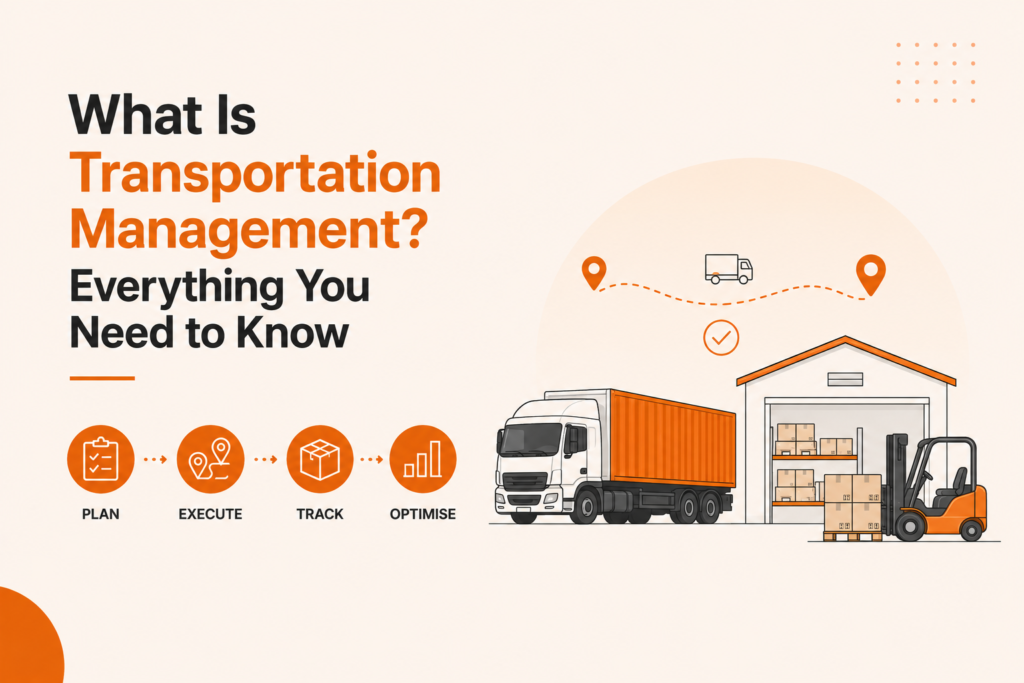
What is transportation management, exactly? At its core, it refers to the planning, execution, and optimisation of the physical movement of goods, whether by road, rail, air, or sea. It encompasses every decision and process involved in getting a product from a point of origin to its final destination, as efficiently and cost-effectively as possible. Businesses that rely on professional transportation services can streamline these processes, reduce costs, and improve delivery performance.
Transportation management is typically supported by a Transportation Management System (TMS), a software platform that helps businesses plan shipments, select carriers, manage freight costs, and monitor delivery performance in real time. A TMS acts as the operational hub for all movement of goods, integrating with other supply chain systems like warehouse management and order management platforms.
But what is transportation management beyond just software? It’s a strategic discipline that involves:
- Carrier selection and contract negotiation, identifying the best carriers for specific routes and volumes, and securing competitive freight rates
- Route optimisation, finding the most efficient paths for shipments to reduce fuel costs, transit times, and carbon emissions
- Load planning, maximising the use of available vehicle or container space to reduce the number of trips required
- Compliance management, ensuring all shipments meet local and international regulations, including customs documentation for cross-border freight
- Performance monitoring, tracking key metrics like on-time delivery rates, freight spend, and carrier performance over time
For businesses that move significant volumes of goods, getting transportation management right can mean the difference between healthy margins and spiralling logistics costs.
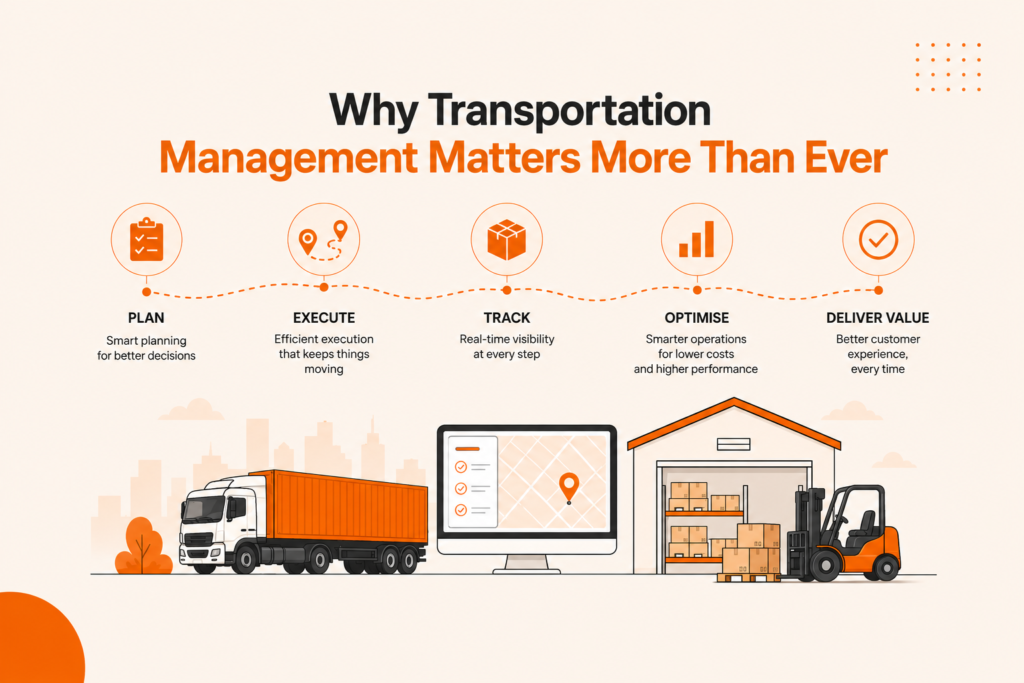
Why Transportation Management Matters More Than Ever
The logistics landscape has changed dramatically in recent years. The rise of e-commerce has set a new bar for delivery speed and transparency. Customers now expect next-day or even same-day delivery as standard, and they want to track their orders in real time. At the same time, fuel costs, driver shortages, and global supply chain disruptions have made what is transportation management a more challenging and more critical question for businesses to answer than ever before.
Businesses that invest in robust transportation management processes gain a clear advantage: they can move goods faster, respond to disruptions more effectively, and deliver a better customer experience, all while keeping costs under control. Understanding what is transportation management at a strategic level is the first step toward building that advantage.
The Engine Behind Efficient Transportation is Fleet Management
One of the most important pillars of transportation management is fleet management, the oversight and administration of a company’s vehicles used to transport goods. Whether you operate a single delivery van or a fleet of hundreds of HGVs, effective fleet management is essential for keeping operations running smoothly and profitably.
Fleet management covers a broad range of responsibilities:
Vehicle Maintenance and Upkeep
A poorly maintained vehicle is a liability. Breakdowns cause delivery delays, damage customer relationships, and generate costly emergency repair bills. Proactive fleet management involves scheduling regular servicing, tracking MOT and inspection dates, and monitoring vehicle health through onboard diagnostics. Many modern fleet management systems provide automated alerts when a vehicle is due for maintenance, preventing small issues from becoming expensive problems.
Driver Management
Your drivers are one of your most valuable assets, and one of your highest costs. Fleet management includes monitoring driver behaviour (such as speeding, harsh braking, and idling), managing driving hours in compliance with legal limits, and ensuring all drivers hold valid licences and certifications. Driver performance data can also be used to identify training needs and reward safe, efficient driving.
Fuel Management
Fuel typically represents 25–35% of total fleet operating costs. Fleet management strategies such as route optimisation, driver behaviour monitoring, and the gradual transition to electric or hybrid vehicles can deliver significant fuel savings over time. Tracking fuel consumption by vehicle and driver also helps identify inefficiencies and potential misuse.
Fleet Utilisation
Are your vehicles being used as efficiently as possible? Fleet management analytics can reveal underutilised vehicles, highlight route inefficiencies, and inform decisions about whether to expand, reduce, or restructure your fleet. For businesses that don’t own their own vehicles, fleet management also involves managing relationships with third-party hauliers and ensuring contracted vehicles meet required standards.
At Global Cargoo Solution, our fleet management capabilities are designed to give clients maximum visibility and control over their vehicle operations, from real-time GPS tracking to detailed performance reporting.
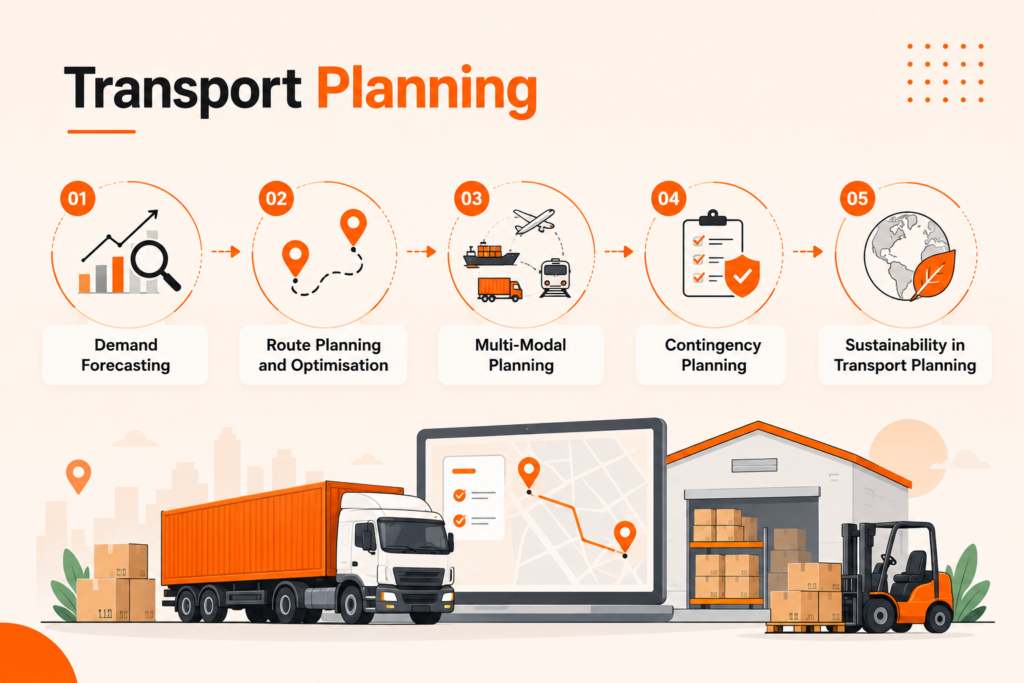
Transport Planning
Effective transport planning is what separates reactive logistics operations from proactive ones. Rather than simply responding to orders as they come in, good transport planning means anticipating demand, optimising routes in advance, and aligning transportation capacity with business needs. For any organisation evaluating what is transportation management in practice, transport planning is where strategy meets day-to-day execution.
Demand Forecasting
Transport planning begins with understanding how much freight needs to move, when, and where. By analysing historical order data, seasonal trends, and upcoming promotions or launches, logistics teams can plan vehicle capacity and carrier bookings well in advance, avoiding last-minute premium freight costs and capacity shortages.
Route Planning and Optimisation
Modern transport planning tools use sophisticated algorithms to calculate the most efficient routes for deliveries, taking into account variables such as distance, traffic patterns, delivery time windows, vehicle capacity, and driver hours. Optimised routes don’t just save fuel, they also enable more deliveries per day, improving overall fleet productivity.
Multi-Modal Planning
For long-distance or international shipments, transport planning often involves combining multiple modes of transport, for example, road haulage to a port, sea freight to the destination country, and local road delivery for the final mile. Effective multi-modal planning ensures seamless handoffs between each leg of the journey and minimises dwell time at transfer points.
Contingency Planning
Even the best-laid transport plans can be disrupted by bad weather, port delays, vehicle breakdowns, or sudden surges in demand. Robust transport planning includes contingency protocols, pre-agreed alternative routes, backup carrier relationships, and clear escalation procedures, so that when disruptions occur, the impact on customers is minimised.
Sustainability in Transport Planning
Increasingly, businesses are incorporating sustainability goals into their transport planning. This includes consolidating shipments to reduce the number of journeys, shifting freight from road to rail where viable, and investing in lower-emission vehicles. Not only does sustainable transport planning reduce environmental impact, it also meets the growing expectations of customers and investors who care about corporate responsibility.
Logistics Management Keeps Transportation Moving
To fully grasp what is transportation management, it’s important to see it in the context of the wider discipline of logistics management. While transportation management focuses specifically on the movement of goods, logistics management encompasses the entire supply chain, from procurement and warehousing through to order fulfilment and returns.
The Relationship Between Transportation and Logistics
Transportation is a critical component of logistics, but it doesn’t operate in isolation. The efficiency of your transportation operations depends heavily on what happens before and after goods are in transit. For example:
- Goods that are poorly picked and packed in the warehouse take longer to load onto vehicles, delaying departures
- Inaccurate inventory data can lead to incorrect shipments, requiring costly returns and re-deliveries
- Delays in customs clearance for international shipments can hold up entire supply chains
Effective logistics management ensures that all these interconnected functions work in harmony, with transportation management sitting at the heart of the outbound supply chain.
Integrated Logistics Management Systems
Modern logistics management relies on integrated technology platforms that connect every function of the supply chain, from supplier portals and warehouse management systems to transportation management systems and customer-facing order tracking portals. This integration eliminates data silos, reduces manual errors, and gives logistics managers a single, real-time view of their entire operation.
Third-Party Logistics (3PL) Providers
Many businesses, particularly those without the scale to justify building their own logistics infrastructure, choose to outsource some or all of their logistics management to a third-party logistics provider (3PL). A 3PL like Global Cargoo Solution provides access to established carrier networks, specialist expertise, advanced technology platforms, and flexible capacity, without the capital investment of building in-house.
For businesses looking to scale quickly, enter new markets, or simply reduce the complexity of managing logistics internally, partnering with a trusted 3PL is often the most efficient and cost-effective solution.
Reverse Logistics
Logistics management also includes reverse logistics, the process of handling returns, repairs, and recycling of goods. With return rates in e-commerce often exceeding 20–30%, having a well-managed reverse logistics process is essential for protecting margins and maintaining customer satisfaction.
Smarter Delivery Tracking
In today’s customer-first business environment, delivery tracking is no longer a nice-to-have; it’s a fundamental expectation. Shoppers and business buyers alike want to know exactly where their order is, when it will arrive, and be alerted immediately if anything changes. Delivery tracking is also one of the most visible outputs of what is transportation management done well, customers may never see your TMS or your route planning tools, but they absolutely notice whether their delivery arrives on time and with proper communication.
Real-Time Tracking Technology
Modern delivery tracking systems use a combination of GPS technology, mobile scanning, and cloud-based platforms to provide real-time visibility at every stage of the delivery journey. From the moment a shipment leaves the warehouse to the point of final delivery, every scan and location update is captured and made available to both the logistics team and the end customer.
Automated Customer Notifications
Leading transportation management systems automatically trigger customer notifications at key milestones, order dispatched, out for delivery, delivered. These proactive communications reduce inbound customer service enquiries, improve satisfaction scores, and build trust in your brand. When exceptions occur (such as a missed delivery or a delay), automated alerts allow customers to take action quickly, rescheduling delivery or arranging collection from a local depot.
Proof of Delivery
Electronic proof of delivery (ePOD) has replaced paper-based delivery notes in most modern logistics operations. Drivers capture a digital signature or photograph on a handheld device at the point of delivery, which is instantly uploaded to the TMS and made available to the shipper and recipient. ePOD eliminates disputes over whether deliveries were made and speeds up the invoicing process for freight charges.
Delivery Analytics and Performance Management
Beyond real-time tracking, delivery data is a goldmine of performance insight. By analysing metrics such as first-attempt delivery success rates, average transit times by carrier and route, and the frequency of exceptions by type, logistics managers can identify patterns, address root causes, and continuously improve delivery performance.
At Global Cargoo Solution, our clients benefit from a fully integrated delivery tracking portal that provides end-to-end shipment visibility, giving both our clients and their customers complete confidence in every delivery.
Conclusion
Understanding what is transportation management is the first step toward building a logistics operation that truly supports your business goals. From strategic transport planning and proactive fleet management to integrated logistics management and real-time delivery tracking, every element of what is transportation management plays a vital role in getting goods to customers faster, more reliably, and more cost-effectively. As supply chains continue to evolve and customer expectations keep rising, businesses that invest in strong transportation management practices, whether through in-house capability or by partnering with an experienced provider, will be the ones that thrive.
Global Cargoo Solution is here to help. Whether you need end-to-end logistics management, specialist freight solutions, or simply better visibility over your deliveries, our team of experts is ready to build a solution that works for your business. Contact us today to find out how we can take your transportation operations to the next level.
Frequently Asked Question
1. What is TMS (Transportation Management System)?
A Transportation Management System (TMS) is software that helps businesses plan, execute, and optimize the movement of goods. It streamlines tasks such as route planning, carrier selection, shipment tracking, freight cost management, and delivery scheduling. A TMS improves supply chain efficiency, reduces transportation costs, and provides real-time visibility into shipments.
2. What is transportation management?
Transportation management is the process of planning, organizing, executing, and monitoring the movement of goods from one location to another. It involves selecting carriers, optimizing routes, managing freight costs, tracking shipments, and ensuring products are delivered safely, on time, and within budget.
3. What is OTM (Oracle Transportation Management)?
Oracle Transportation Management (OTM) is a cloud-based transportation management solution developed by Oracle. It helps businesses manage domestic and international logistics by automating transportation planning, freight execution, carrier management, shipment tracking, and freight payment. OTM is widely used by large enterprises to improve supply chain efficiency and reduce logistics costs.
4. Why is transportation management important?
Transportation management is important because it helps businesses reduce shipping costs, improve delivery performance, optimize routes, and enhance customer satisfaction. Effective transportation management also increases supply chain visibility, minimizes delays, and ensures efficient use of transportation resources.
5. What are the benefits of a transportation management system?
A transportation management system offers several benefits, including lower freight costs, automated shipment planning, real-time tracking, improved route optimization, better carrier management, and detailed reporting. These features help businesses improve operational efficiency while delivering a better customer experience.
6. Who uses transportation management systems?
Transportation management systems are used by manufacturers, retailers, wholesalers, distributors, logistics providers, freight brokers, and e-commerce businesses. Any organization that regularly ships goods can use a TMS to simplify logistics operations, improve visibility, and manage transportation more efficiently.