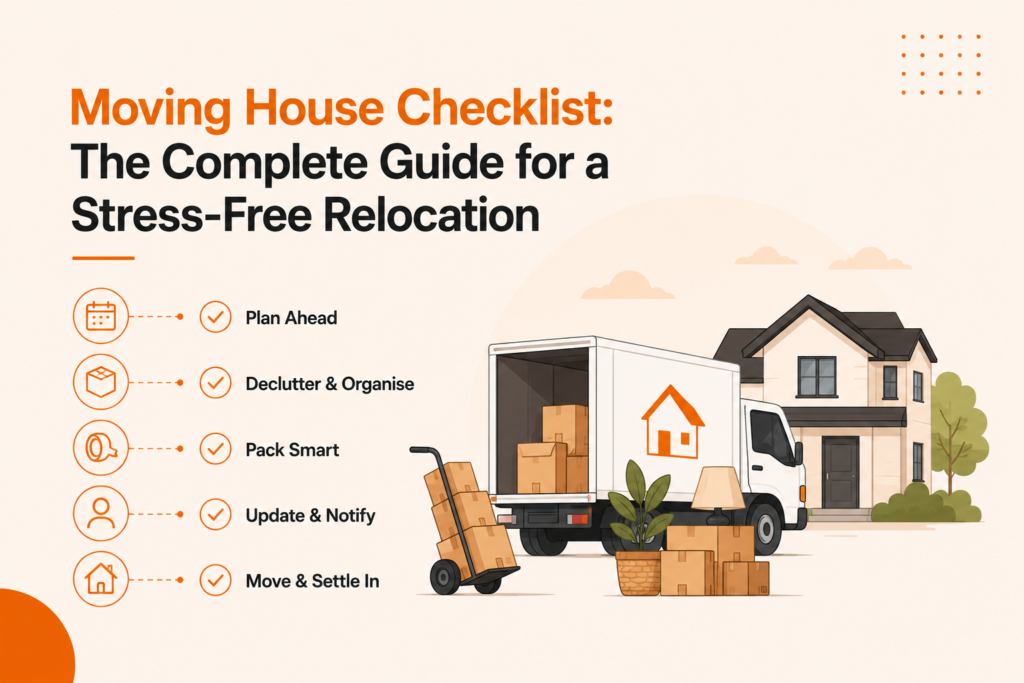
Moving to a new home is one of life’s most exciting milestones, but without the right plan, it can quickly become one of the most stressful. A thorough moving house checklist is the single most powerful tool you can have when preparing for a relocation. Whether you’re moving across town or across borders, having every task mapped out in advance saves time, reduces anxiety, and keeps costly mistakes to a minimum. At Global Cargoo Solution, we’ve helped hundreds of families and businesses relocate with confidence, and we know firsthand that the difference between a chaotic move and a smooth one comes down to preparation.
In this complete guide, we’ll walk you through everything you need to know, from planning your house moving timeline weeks in advance, to assembling your packing checklist to settling into your new home with ease.
Planning Your Timeline Like a Pro for House Moving
Successful house moving starts long before the removal van pulls up. Ideally, your planning should begin six to eight weeks before your move date. Starting early gives you the breathing room to compare quotes, sort through belongings, and handle admin tasks without last-minute panic.
8 Weeks Before the Move
Start by setting a firm moving date and booking a professional removal company or van hire. If you’re relocating internationally, speak to a freight and logistics specialist like Global Cargoo Solution. Early international house moving involves customs documentation, shipping timelines, and specialist packing that require extra lead time.
Begin sorting through your home, room by room. Decide what you’re keeping, donating, selling, or discarding. This decluttering stage is often overlooked, but it dramatically reduces the volume you’ll need to pack and transport, and ultimately, what you’ll pay.
6 Weeks Before the Move
Notify key institutions of your upcoming address change. This includes your bank, employer, HMRC (or your relevant tax authority), GP, dentist, schools, and any subscription services. Set up mail redirection through Royal Mail or your national postal service.
Start collecting packing materials: sturdy boxes, bubble wrap, packing tape, and markers. You can often source free boxes from local supermarkets or online community groups.
4 Weeks Before the Move
This is the time to begin packing non-essential items: seasonal clothing, books, decorative items, and anything you won’t need before the move. Label every box clearly with its contents and destination room. Confirm all logistics with your removal company, including access times, parking arrangements, and any special requirements for large or fragile items.
2 Weeks Before the Move
Arrange disconnection or transfer of utilities, gas, electricity, water, broadband, and council tax. Contact your insurance provider to ensure your contents insurance transfers to the new address. If you have children or pets, arrange suitable care for moving day to reduce stress and keep them safe.
1 Week Before the Move
Defrost your freezer at least 24 hours before moving day. Most removal companies won’t transport a freezer that hasn’t been fully defrosted and dried. Dismantle any furniture that needs to be taken apart and keep all screws and fittings in labelled bags. Do a final sweep of storage areas, including the loft, garage, garden shed, and under-stair cupboards. These are the spots most commonly forgotten.
Moving Day
On the day itself, try to be up early. Greet your removal team, walk them through the property, and point out any fragile or high-value items that need special care. Keep your essentials box, valuables, and important documents with you at all times. These should never go in the removal van. Before you leave, do a final walkthrough of every room, check all windows are locked, and hand over keys to the new occupants or estate agent.
Moving Week
Finish packing all remaining items and prepare an “essentials box.” More on that in the packing section below. Confirm all bookings one final time, and do a thorough walkthrough of your current property to ensure nothing is left behind.
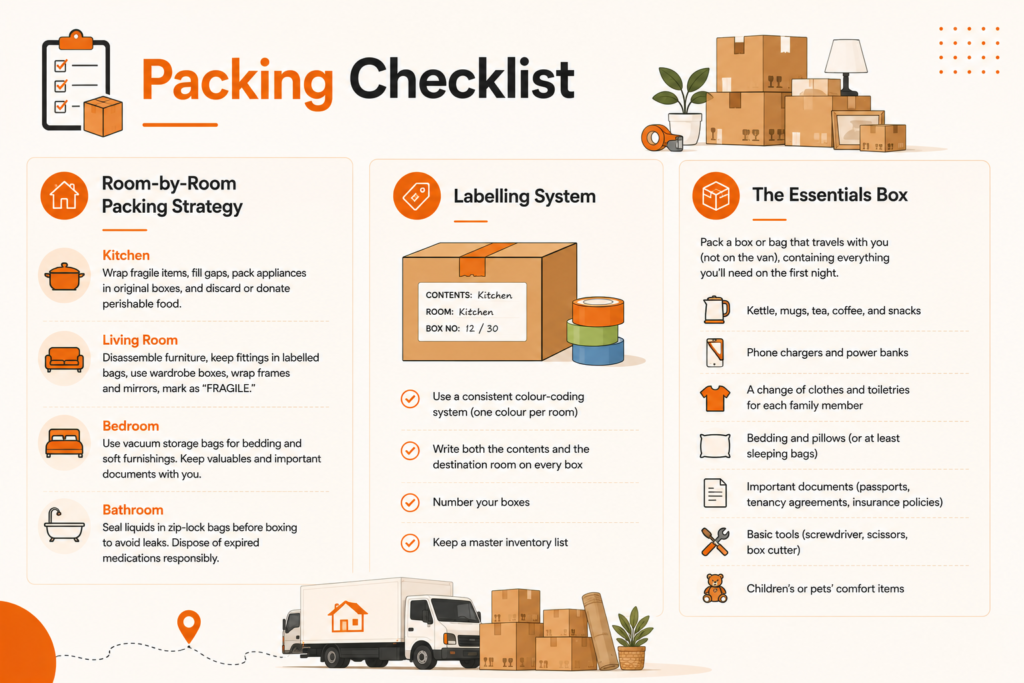
Packing Checklist
A detailed packing checklist is the backbone of any well-organised move. Packing haphazardly leads to damaged items, missing essentials, and hours of unnecessary unpacking stress. Follow these tried-and-tested principles to make the process as efficient as possible.
Room-by-Room Packing Strategy
Tackle one room at a time to stay organised. Pack the least-used rooms first, typically spare bedrooms, loft spaces, and garages, and leave daily essentials like kitchen items and toiletries until last.
Here’s a room-by-room packing checklist to guide you:
Kitchen: Wrap fragile items like glasses and plates individually in bubble wrap or packing paper. Fill gaps in boxes with crumpled paper or tea towels to prevent movement. Pack appliances in their original boxes where possible. Discard or donate perishable food you won’t use before the move.
Living Room: Disassemble flat-pack furniture and keep screws and fittings in labelled zip-lock bags taped to the relevant item. Use wardrobe boxes for hanging clothes. Wrap picture frames and mirrors in bubble wrap and mark boxes as “FRAGILE.”
Bedroom: Use vacuum storage bags for bedding and bulky soft furnishings to maximise space. Keep valuables and important documents with you rather than on the removal van.
Bathroom: Seal liquids (shampoos, cleaning products) in zip-lock bags before boxing to avoid leaks. Dispose of expired medications responsibly.
Labelling System
Use a consistent colour-coding system, one colour per room, and write both the contents and the destination room on every box. Number your boxes and keep a master inventory list. This makes it much easier to identify missing items on the other end.
The Essentials Box
Every good moving house checklist includes an essentials box, a single box or bag that travels with you (not on the van), containing everything you’ll need on the first night in your new home. Pack it with:
- Kettle, mugs, tea, coffee, and snacks
- Phone chargers and power banks
- A change of clothes and toiletries for each family member
- Bedding and pillows (or at least sleeping bags)
- Important documents (passports, tenancy agreements, insurance policies)
- Basic tools (screwdriver, scissors, box cutter)
- Children’s or pets’ comfort items
Having this box ready means you won’t be rummaging through dozens of boxes when you’re exhausted at the end of moving day.
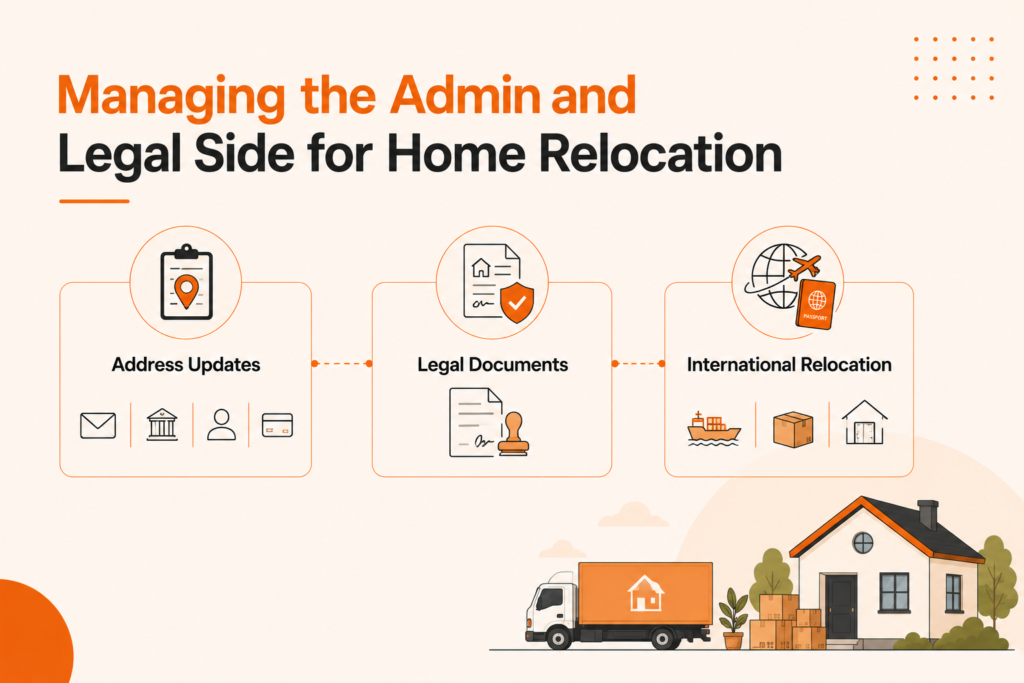
Managing the Admin and Legal Side For Home Relocation
Home relocation is far more than physically moving boxes; it involves a significant amount of administrative and legal work that can easily slip through the cracks if you’re not organised.
Address Updates: Who to Notify
One of the most critical steps in any home relocation is updating your address across all relevant organisations. Missing even one can result in delayed correspondence, financial penalties, or identity issues down the line. Use the following as your notification checklist:
- HMRC / tax authority
- Employer (HR department)
- Banks, building societies, and credit card providers
- Pension providers and investment accounts
- DVLA (update your driving licence and vehicle registration)
- GP, dentist, and specialist healthcare providers
- Children’s schools and nurseries
- Electoral roll (register to vote at your new address)
- Loyalty programmes and online shopping accounts
- Magazine subscriptions and regular deliveries
Legal and Property Admin
If you’re purchasing rather than renting, your solicitor or conveyancer will handle the legal transfer of the property. Ensure you receive all relevant documents on completion day, including title deeds, guarantees for any work done on the property, and planning permissions.
If renting, photograph every room in detail on the day you move in and send copies to your landlord or letting agent. This protects your deposit by documenting the property’s condition at the start of your tenancy.
International Home Relocation
For those undertaking an international home relocation, the process becomes significantly more complex. You’ll need to navigate customs regulations, import restrictions, and potentially quarantine requirements for certain goods. Working with an experienced international logistics partner like Global Cargoo Solution takes the guesswork out of this process. Our team handles documentation, customs clearance, and door-to-door delivery so your possessions arrive safely wherever you’re headed in the world.
Moving Tips
Beyond the checklist itself, there are dozens of practical moving tips that experienced movers swear by. These small details can make a big difference to how your move day unfolds.
Book Early, Especially in Peak Season
Removal companies and self-storage facilities get booked up quickly during the summer months (June–August) and around school holidays. If your move date falls in peak season, secure your booking as early as possible ideally eight weeks in advance. You’ll also often secure a better rate by booking early.
Don’t Underestimate the Weight of Boxes
Books are heavy. So are vinyl records, tools, and kitchen appliances. Distribute weight sensibly heavy items in small boxes, lighter items in larger ones. Overfilled boxes are not only a back injury risk for your removal team, they’re more likely to collapse or split in transit.
Take Photos Before Disassembly
Before dismantling furniture, shelving units, or complex cable setups, photograph them from multiple angles. These photos are invaluable when it comes to reassembly in your new home.
Measure Before You Move
One of the most common and costly moving tips people wish they’d followed is measuring furniture against doorways, staircases, and room dimensions at the new property before moving day. There’s nothing worse than discovering your sofa won’t fit through the front door on the day.
Use Soft Items as Padding
Towels, t-shirts, socks, and scarves make excellent padding for fragile items. Using soft furnishings as wrapping material serves a dual purpose it protects your breakables and fills boxes with things that need to be packed anyway.
Clean as You Go
Rather than leaving a full clean of your old property until the very end (when you’ll be exhausted), clean each room after it’s been emptied. This makes the final handover much less daunting.
Hire Professionals for Specialist Items
Pianos, fine art, antiques, and large safes all require specialist handling. Do not attempt to move these yourself or rely on a general removal company without the right equipment. Global Cargoo Solution offers specialist packing and transport for high-value and fragile items, ensuring they’re protected every step of the way.
Set Up Utilities Before You Arrive
Nothing is worse than arriving at your new home after a long, exhausting moving day to find you have no electricity, broadband, or heating. Arrange for utilities to be active from your move-in date, and test them during your pre-move walkthrough if possible.
Settling In: What to Do After Moving Day
Many people focus all their energy on the move itself and forget that the days immediately after are just as important. Once you’ve arrived at your new home, a few key actions will help you settle in quickly and comfortably.
Prioritise the Essentials First
Before you start unpacking every box, focus on setting up the rooms you need most urgently: the bedroom, bathroom, and kitchen. A good night’s sleep on your first night makes the following day easier. Set up beds first, then sort out the bathroom, and finally get the kitchen functional enough to make meals without ordering takeaway every night.
Check the Property Thoroughly
Walk around the property and test everything: light switches, plug sockets, heating, hot water, and any appliances included in the sale or rental. Note anything that isn’t working and report it to your landlord, estate agent, or solicitor promptly. If you’re a buyer, check that any items agreed to be left by the previous owner (white goods, curtains, garden furniture) are present and in the condition agreed.
Introduce Yourself to Neighbours
It might feel old-fashioned, but introducing yourself to neighbours early on is one of the best things you can do. Good neighbours are invaluable; they can advise on local services, keep an eye on your property when you’re away, and make your new community feel welcoming much faster.
Register with Local Services
Register with a local GP and dentist as soon as possible, especially if you have young children or ongoing health needs. Waiting lists for NHS GPs can be long in some areas, so the sooner you get on the books, the better. Also, register your children with their new school if not already done, and update any parking permits or residents’ zone passes with your local council.
Unpack Strategically
Resist the urge to unpack everything at once. Work through rooms systematically, living areas first, then storage spaces like the loft and garage last. As you unpack, reassess what you actually need in your new space. Some items that seemed essential in your old home may not suit the new layout, giving you another opportunity to declutter.
Conclusion
A well-planned moving house checklist is the foundation of a successful, stress-free relocation. From the early stages of house moving planning to assembling a thorough packing checklist, managing home relocation admin, and applying expert moving tips on the day, every step matters. The more organised you are in advance, the more smoothly things will unfold when the big day arrives. At Global Cargoo Solution, we understand that every move is unique. Whether you’re relocating locally, nationally, or internationally, our team of logistics experts is here to support you at every stage from packing and transport to customs clearance and final delivery. Get in touch with us today for a free quote and let us take the stress out of your next move.
FAQs
1. What should be included in a moving house checklist?
A moving house checklist should include tasks like notifying utility providers, updating your address, booking a moving company, packing room by room, organizing important documents, and checking that nothing is left behind before moving day.
2. When should I start using a moving house checklist?
It’s best to start using a moving house checklist at least 6–8 weeks before your moving date. This gives you enough time to plan, declutter, arrange services, and complete each task without unnecessary stress.
3. How can a moving house checklist make moving easier?
A moving house checklist helps you stay organized by breaking the move into manageable tasks. It reduces the chances of forgetting important steps, keeps your timeline on track, and makes the entire moving process more efficient.
4. Can I create a moving house checklist for each room?
Yes, creating a room-by-room moving house checklist is an effective way to stay organized. It allows you to pack systematically, label boxes clearly, and unpack more easily in your new home.
5. Is a printable moving house checklist better than a digital one?
Both options work well. A printable moving house checklist is easy to tick off by hand, while a digital checklist can be updated, shared with family members, and accessed from your phone during the move.
6. What are the most commonly forgotten tasks on a moving house checklist?
People often forget to redirect their mail, update their address with banks and government services, transfer utilities, pack an essentials box, and take final meter readings before leaving their old home.